






Roulette remains one of the most popular casino games due to its simplicity and fast-paced nature. Though it’s a game of chance, understanding the rules, bet types, and key strategies can significantly improve your gaming experience.

Basic Rules of Roulette
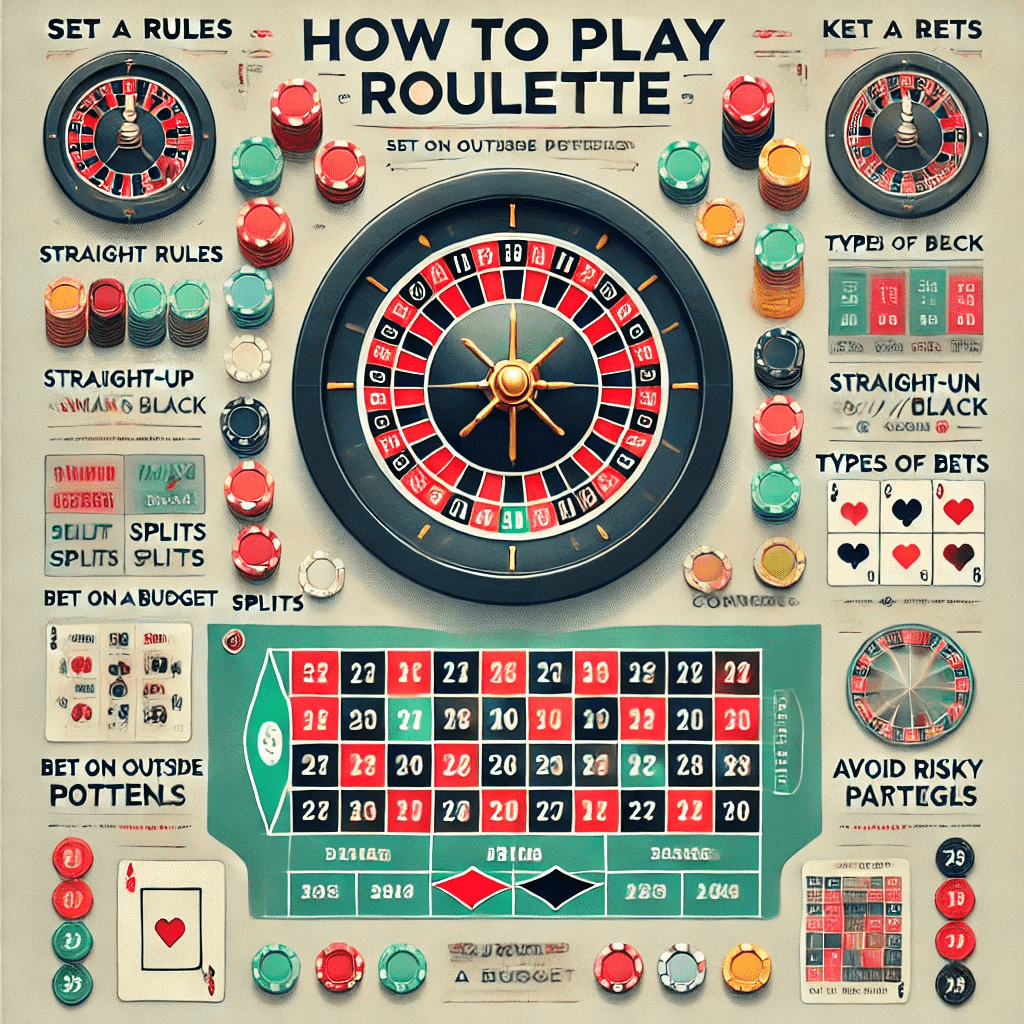
Roulette is straightforward. Players place bets on a roulette table, and the dealer spins a wheel in one direction while rolling a ball in the opposite direction. The number where the ball lands determines the winning bet. If the ball lands on your selected number, you win a payout according to the odds.
- A straight-up bet on a single number pays 35:1.
- A bet on red or black pays 1:1.
- Other bets are calculated based on the likelihood of the outcome.
Players can place bets on individual numbers, colors, or groups of numbers. Betting on multiple outcomes increases your chances of winning, but also raises the total amount staked.
European vs. American Roulette
The primary difference between European and American roulette is the number of pockets on the wheel.
- European roulette has 37 pockets (numbers 1–36 and a single zero).
- American roulette has 38 pockets (numbers 1–36, a single zero, and a double zero).
The extra “00” in American roulette increases the house edge, making European roulette statistically more favorable for players.
Main Bet Types in Roulette
Roulette bets fall into two main categories: inside bets and outside bets.
Inside Bets
These involve betting on specific numbers or small groups of numbers:
- Straight-Up: A single number.
- Split: Two adjacent numbers.
- Street: Three numbers in a horizontal line.
- Corner: Four numbers that form a square.
Outside Bets
These cover broader ranges and offer better odds with lower payouts:
- Red or Black: Bet on the color of the number.
- Even or Odd: Bet on whether the number will be even or odd.
- Low or High: Bet on numbers from 1–18 (low) or 19–36 (high).
- Dozens or Columns: Bet on 12-number segments or vertical columns.
Why Strategy Matters
Although roulette is based on chance, using a strategy helps you control your bankroll, reduce emotional decision-making, and structure your bets. While no strategy can eliminate risk or guarantee consistent winnings, it can help prolong your play and manage losses.
Popular Roulette Strategies
Martingale System
The Martingale system involves doubling your bet after every loss, aiming to recover all losses and gain a profit with a single win.
Advantages:
- Simple to apply.
- Covers losses after a single win.
Disadvantages:
- Requires a large bankroll.
- Risk of hitting table limits after a losing streak.
D’Alembert System
This method increases your bet by one unit after a loss and decreases it by one after a win.
Advantages:
- Less aggressive than Martingale.
- More stable bet progression.
Disadvantages:
- Still vulnerable to long losing streaks.
- Doesn’t guarantee profit.
Fibonacci System
This strategy uses the Fibonacci sequence (1, 1, 2, 3, 5, 8, etc.) to determine bet sizes. After a loss, you move one step forward in the sequence; after a win, you move two steps back.
Advantages:
- Slower progression.
- Easier bankroll control.
Disadvantages:
- Sequences can grow quickly.
- Requires careful tracking.
Paroli System (Reverse Martingale)
With this strategy, you double your bet after each win, not after a loss.
Advantages:
- Maximizes profits during winning streaks.
- Limits risk during losing streaks.
Disadvantages:
- Success depends on consecutive wins.
- Risk of losing increased bets if the streak ends.
Betting on Colors or Columns
This method involves sticking to one color or column and adjusting bets based on results.
Advantages:
- Simple and low-risk.
- Suitable for beginners.
Disadvantages:
- Smaller payouts.
- No protection against losing streaks.
Choosing the Right Strategy
Your ideal strategy depends on your bankroll, risk tolerance, and playing style.
- Low bankroll: Stick with D’Alembert or color/column bets.
- High bankroll and higher risk tolerance: Consider Martingale or Fibonacci.
- Aggressive style: Paroli may be effective during winning runs.
- Conservative approach: Gradual systems like D’Alembert offer more control.
Test Strategies in Demo Mode
Before betting real money, try different strategies in demo versions of roulette games. This helps you:
- Understand how a system works over time.
- Identify weaknesses.
- Develop emotional discipline.
Most online casinos offer free roulette modes using virtual credits. Take advantage of these to practice safely.
Bankroll Management Tips
Managing your bankroll is essential to long-term play. Consider the following:
- Set loss limits: Decide how much you’re willing to lose before starting.
- Limit per bet: Don’t risk more than 5% of your bankroll on a single spin.
- Adapt as you go: Adjust your strategy based on how your bankroll changes.
- Avoid emotional betting: Stick to pre-planned limits, even when chasing losses or riding a streak.
Conclusion
Roulette is a game of luck, but strategy and smart bankroll management can improve your experience and help you play longer. Strategies like Martingale, D’Alembert, Fibonacci, and Paroli each offer different ways to manage risk, with varying levels of complexity and aggression.
Ultimately, the most effective approach is one that aligns with your goals, playing style, and financial comfort zone. Test your methods in demo mode, stay disciplined, and remember that no system can override the element of chance.